Imagine an airport that handles millions of passengers, keeps runway lights glowing through the night, powers massive air conditioning systems, luggage belts, radars, and terminals, and doesn't draw a single unit of power from coal or diesel. That's not a futuristic concept. It's real, it's in India, and it's been running successfully for over a decade.
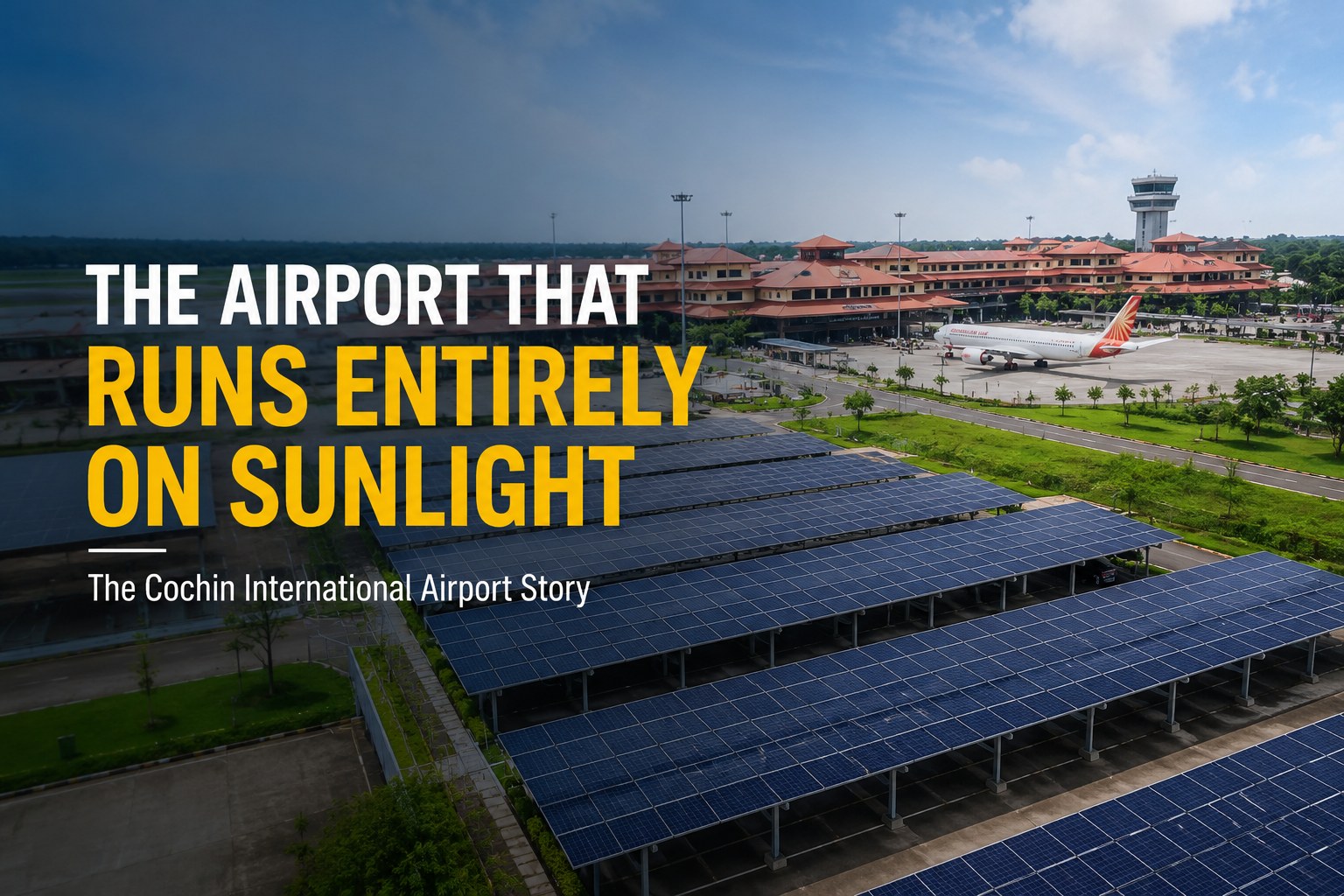
Cochin International Airport (CIAL) in Kerala holds a title very few places on Earth can claim: the world's first fully solar-powered airport. For any business owner, factory manager, or homeowner wondering whether solar can genuinely power something big and important, CIAL is proof that it absolutely can. Here's the full story of how it happened, and why it still matters today.
How It All Began
CIAL's solar journey didn't start with a grand announcement, it started with a small, cautious pilot. Back in 2013, the airport installed a modest 100 kWp pilot plant on the rooftop of its international arrival block, largely to test whether solar could genuinely offset its rising electricity costs. Kerala's location, close to the equator, meant the airport received strong, consistent sunlight through most of the year, a natural advantage most airports don't get to use.
The pilot worked. And CIAL scaled up quickly from there.
The Moment It Became Official, August 2015
On 18 August 2015, CIAL commissioned a 12 MW solar plant, and with that, the airport achieved something no other airport in the world had done before: it became fully "power neutral," generating as much electricity through solar as it consumed. With a total installed capacity of 13.1 MWp at the time, Cochin officially became the world's first airport to run entirely on solar power.
This wasn't a symbolic gesture or a partial offset, it meant every terminal light, every security scanner, every check-in counter, and every runway system was, on balance, powered by sunlight falling on Kerala soil.
Scaling Up: From 13 MW to 50 MW
What makes CIAL's story genuinely impressive is that it didn't stop at "good enough." Over the following years, the airport kept expanding its solar footprint:
- By 2018, capacity had grown to 30 MWp, largely through a mix of rooftop and ground-mounted installations spread across airport land, including areas near the international cargo complex.
- In December 2020, CIAL inaugurated a 5.1 MW solar carport alongside its revamped Terminal 2, at the time, the largest solar carport built at any airport, pushing total capacity to roughly 80 MW under various project counts.
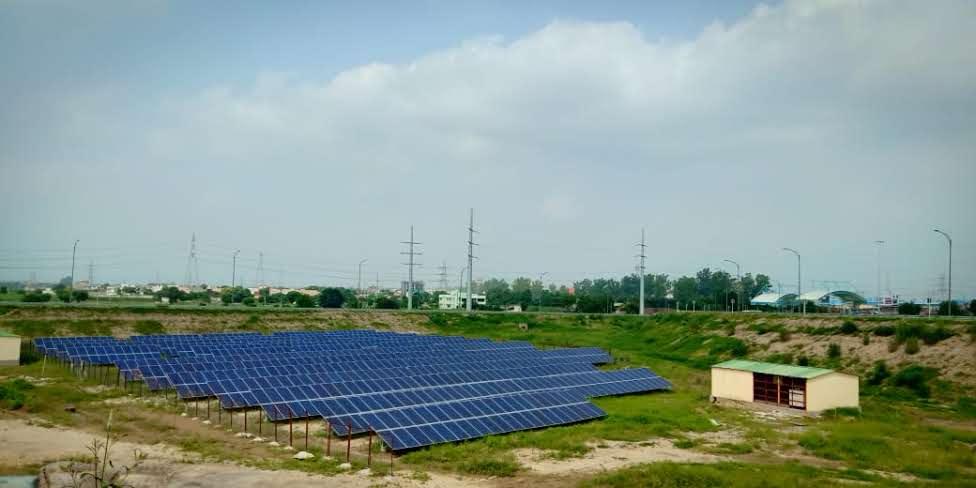
- Today, CIAL operates at a stabilized installed capacity of around 50 MWp across more than 92,000 solar panels spread over roughly 94 acres of airport land, generating close to 100,000 units of electricity every single day.
To make the most of the land under and around its solar panels, CIAL even introduced organic farming between panel rows, literally growing vegetables and generating clean power on the same plot of land at the same time. It's a small but clever example of how solar infrastructure doesn't have to compete with other land use if planned well.
The Numbers That Really Matter
Here's where the story moves from impressive to genuinely inspiring for anyone considering solar for their own business:
- CIAL's solar installations now generate approximately 73 million units of green energy annually.
- This reduces the airport's carbon footprint by close to 66,000 tones of CO₂ every year, roughly equivalent to planting nearly 3 million trees, or saving around 30 million liters of fossil fuel.
- Since inception, the airport's solar plants have collectively avoided more than 1,60,000 metric tones of CO₂ emissions, comparable to the carbon absorbed by 25 lakh trees grown over ten years.
- Financially, the electricity CIAL has generated from solar is valued at well over ₹170 crore, money that would otherwise have gone toward buying power from the grid.
- CIAL didn't just become self-sufficient, it became a power surplus organization, feeding tens of millions of surplus units back into Kerala's state grid every year.
Recognition That Followed
The achievement didn't go unnoticed globally. In 2018, CIAL received the United Nations' "Champions of the Earth" award, the UN's highest environmental honor, specifically for demonstrating that critical, energy-intensive infrastructure like an airport could be run entirely on renewable power. It has since picked up multiple other recognitions, including state-level renewable energy awards, cementing its place as a global reference case for sustainable infrastructure.
Why This Story Still Matters in 2026
It would be easy to file this away as "old news”, after all, CIAL achieved power neutrality back in 2015. But its real value today is as a working proof of concept, especially now that solar economics have gotten dramatically better since then.
If a 24x7 international airport, with runway lighting, security systems, cold storage, retail, and constant passenger movement, could be fully powered by solar over a decade ago, when panel costs, financing options, and battery technology were nowhere near as advanced as they are today, imagine what's possible now for a factory, a warehouse, a hospital, or a commercial complex.
CIAL essentially answered the biggest question people still ask about solar: "Can it really handle serious, large-scale power demand?" The answer, proven year after year since 2015, is yes.
What Businesses Can Learn from CIAL's Playbook
A few lessons from CIAL's journey are directly useful for any organization thinking about solar:
- Start with a pilot. CIAL didn't leap straight to 50 MW, it began with a 100 kWp test project to validate the numbers before scaling.
- Use available space creatively. A mix of rooftop panels, ground-mounted plants, and solar carports let CIAL maximize generation without disrupting core operations.
- Think beyond just "going green." CIAL's solar investment paid for itself many times over in direct electricity savings, sustainability and financial sense went hand in hand.
- Plan for surplus, not just self-sufficiency. Being able to export excess power back to the grid turned CIAL's solar plant from a cost-saving measure into a genuine revenue stream.
The Bigger Picture
CIAL's story is a powerful reminder that India isn't new to large-scale solar success, it's had a working example running for over ten years. And with the country's solar sector now growing faster than ever, with better subsidies, better technology, and better financing than what was available in 2013, replicating a version of CIAL's success, even at a smaller scale, is more achievable today than it has ever been.
Whether it's a factory rooftop, a warehouse, an educational campus, or a commercial building, the fundamentals CIAL proved still hold true: solar can reliably power serious, uninterrupted operations while cutting costs and carbon at the same time.
Ready to Write Your Own Solar Success Story?
You don't need to be an international airport to benefit from solar the way CIAL did. At Sarhat Energy, we help businesses of every size across industrial rooftops, PM-KUSUM solar parks, and open access power projects design solar systems that fit their actual power needs, with clear numbers on savings, payback period, and long-term returns.
Get in touch with our team at Sarhat Energy for a free consultation and find out what a CIAL-style transformation could look like for your business.
Sources: Cochin International Airport (CIAL) official communications, CIAL Solar Power Project documentation, Government of Kerala Best Practices submission (Department of Economic Affairs), Elets eGov, International Airport Review, Climate Action.