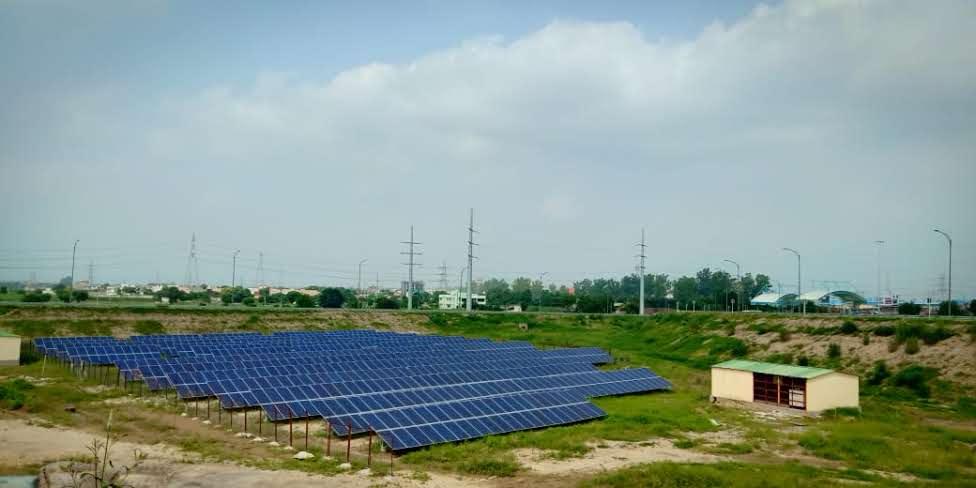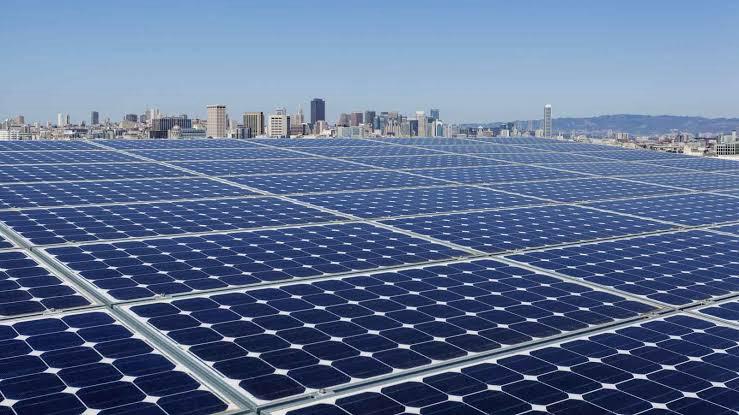
If you've noticed more rooftops with solar panels in your neighborhood, more factories talking about "open access power," or your business-owner friends mentioning they've "gone solar”, you’re not imagining things. India is in the middle of one of the fastest energy shifts the country has ever seen, and 2026 is turning out to be a landmark year for it.
At Sarhat Energy, we track this market every single day because it's what we do, we help homes, factories, and businesses switch to solar. But we also believe people should understand why this shift is happening before they plan about their own roof or their own electricity bill. So, let's break it down in simple language, backed by real numbers, no jargon overload.
India Just Crossed a Massive Milestone
By the end of the last financial year (March 2026), India's total installed solar power capacity crossed 150 gigawatts (GW), and by May 2026, it had already climbed to roughly 157 GW. To put that in perspective, solar alone now makes up more than half of India's entire renewable energy capacity, excluding large hydro projects.
Here's the part that should really grab your attention: in FY 2025-26 alone, India added about 44.6 GW of new solar capacity, almost double what was added the year before. That's not a small improvement; that's the industry finding its rhythm after years of policy experiments, supply chain hiccups, and slow starts. Analysts now expect momentum to continue through the second half of 2026, with the country firmly on track toward the government's goal of 500 GW of non-fossil fuel capacity by 2030.
For context on where India stands globally, the country has now moved past Brazil to become the third-largest nation in the world for total renewable energy capacity, behind only China and the United States. That's a genuinely big deal for a country that was importing the bulk of its solar equipment less than a decade ago.
Rooftop Solar Is Having Its Moment
For years, rooftop solar in India grew slower than everyone hoped, mostly because of red tape, inconsistent state rules, and financing gaps. That's changing fast.
In FY 2025-26, rooftop solar installations grew by nearly 69% year-on-year, largely driven by the PM Surya Ghar scheme, which has now supported more than 26 lakh households with over ₹14,771 crore disbursed in central subsidies. In the first half of 2026 alone, rooftop additions grew by a striking 104% compared to the same period last year.
What does this mean practically? Rooftop solar has stopped being a "nice to have" and become a mainstream financial decision, for homeowners tired of rising electricity bills, and increasingly for small and mid-sized businesses that want to control their biggest recurring cost: power.
The Real Story for Businesses: Open Access Is Changing the Game
This is the part that matters most if you run a factory, a warehouse, a hospital, a textile unit, or any business with a serious electricity bill.
Industrial and commercial power tariffs have been climbing steadily, in some states, DISCOM (electricity board) tariffs have gone up by as much as 15% annually in recent years, driven by rising power purchase costs and the financial stress most state utilities are under. Businesses paying ₹6 to ₹8 per unit for grid power are increasingly asking: is there a better way?
The answer many are landing on is solar open access, where a business buys solar power directly from a solar plant (sometimes located many kilometers away) instead of relying entirely on the state electricity board. Landed costs through open access can come down to roughly ₹3.5–4.5 per unit in several states, translating into savings of 30–40% on annual power bills.
This segment crossed 30 GW of cumulative capacity by the end of 2025, after adding around 7.8 GW in that year alone, the fastest growth this market has ever recorded, and industry estimates suggest it will cross 10 GW of fresh additions in 2026. What's especially interesting is who is adopting it now. It's no longer just large corporates chasing ESG targets. Textile units, cold storage facilities, food processing plants, educational institutions, hospitals, and even flour mills are jumping in, because the economics now make sense on their own, with or without sustainability pressure.
Rajasthan, Gujarat, and Maharashtra led the charge in FY 2025-26's utility-scale additions, while Karnataka, Maharashtra, and Gujarat have emerged as the strongest states for open access adoption specifically, thanks to clearer state policies and stronger industrial demand.
Battery Storage Is the Next Big Shift
One trend worth watching closely: battery energy storage (BESS) paired with solar is finally becoming commercially viable in India, with global battery costs dropping to around $117–125 per kWh. This matters because it solves Solar’s oldest limitation, the sun doesn't shine 24x7. Industries that need round-the-clock power, like data centers, cold chains, and continuous-process manufacturing, are increasingly exploring solar-plus-storage instead of solar alone. A few states, like Rajasthan, have even started mandating storage for larger open-access projects, alongside incentives such as exemptions on transmission charges for compliant projects.
PM-KUSUM Is Quietly Transforming Rural and Agricultural Power Too
For farmers and rural landowners, the PM-KUSUM scheme has been a genuine success story, it added roughly 7.67 GW of capacity in FY 2025-26 alone, helping farmers install solar pumps and small solar plants that cut diesel dependency and create an additional income stream by feeding surplus power back to the grid.
So, What Does All This Mean for You?
Whether you're a homeowner watching your monthly electricity bill creep up, or a business owner sitting on an idle rooftop or an energy-hungry facility, the numbers tell a simple story: solar in India has moved from "future technology" to "current best decision." Costs have come down, financing has improved, government support is at an all-time high, and the payback periods that used to scare people away have shrunk considerably.
The bigger risk today isn't jumping in too early; it’s waiting too long while your competitors and neighbors lock in cheaper power and you keep paying rising DISCOM tariffs.
Thinking About Solar for Your Home, Factory, or Business?
At Sarhat Energy, we work across industrial rooftops, PM-KUSUM solar parks, and open access power projects, helping clients navigate exactly the kind of decisions this article talks about rooftop vs. open access, subsidy eligibility, right-sizing your system, and realistic payback timelines based on your actual power consumption.
If you've been on the fence about solar, now is a genuinely good time to have a proper conversation about it, not a sales pitch, just a clear-eyed look at your numbers.
Get in touch with our team at Sarhat Energy for a free consultation and a no-obligation assessment of how much you could save by switching to solar.
Sources: Ministry of New and Renewable Energy (MNRE), Press Information Bureau (PIB), JMK Research & Analytics, IEEFA, Mercom India, Saur Energy, PV Magazine India, PV-Tech.